

Lawyer, lecturer, director and author
Gal Levertov represented the State of Israel as a prosecutor in a wide array of criminal trials, including white-collar offences, organised crime and political corruption. Adv. Levertov served as the director of the Department of International Affairs, and was among those who established the witness protection programme in Israel.
Gal Levertov holds lectures in Israel and abroad, in Hebrew and English, for academic and professional audiences, lawyers and accountants, investigators, students, corporations etc.
Gal Levertov holds an LL.B from Bar Ilan University Faculty of Law, an LL.M from Tel Aviv University Faculty of Law, an MA (summa cum laude) from Haifa University Faculty of Social Sciences, and is a graduate (summa cum laude) of the National Security Academy of the IDF. Gal holds a Ph.D in law from the Hebrew University in Jerusalem.
Books
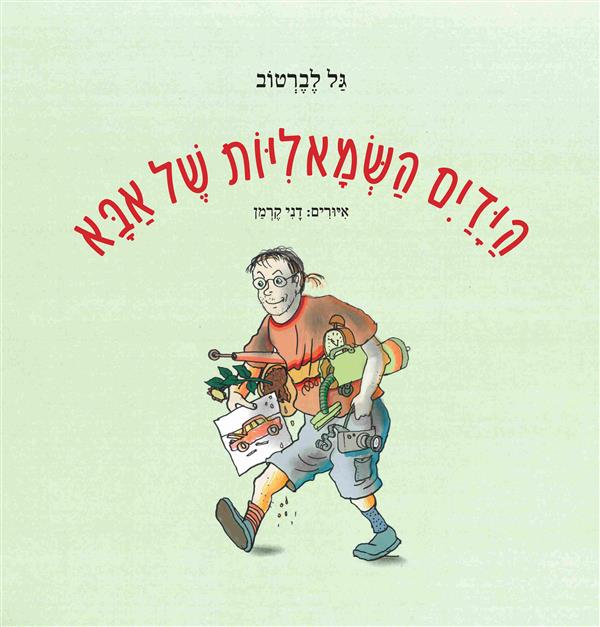
Author of the book "Criminals Without Borders" - the most central and exciting stories of crime and extradition known in Israeli society.


Articles
Interviews
Reports
Speeches
Studio Commentary
Videos
Lectures
Criminals Without Borders
In this lecture the audience is exposed to some of the most thrilling and sensitive crime stories Israeli society has known, including the Boaz Yona and Heftziba affair, the murder of the taxi driver Derek Rot and the escape of his murderer Moshe Ben-Ivgi, the Greek Patriarchate lands affair, as well the affairs of the Commercial Bank, Gregory Lerner, Samuel Scheinbein, Elior Chen and more. The lecture "Extradition stories A" focuses on extradition from Israel to other countries (e.g. the Rozenstein and Abarjil affairs and many more), while "Extradition stories B" covers extradition cases from other countries to Israel (the Dr. Amiram Hochberg affair, Rabbi Eliezer Berland and more).
Human Trafficking
We would like to believe slavery has long been abolished. The reality is different: in our time between 20 to 30 million human beings are locked in slavery, many of whom are children. This lecture presents the phenomenon of "modern slavery", one of the manifestations of trafficking in humans, and shall further elaborate on trafficking in humans for prostitution, for labour, and the fight against human trafficking, including Israel's international role in this field.
International Crime in the Era of Globalisation
The making of a global village including the advancement in technology, computing and transportation has simultaneously led to an increasing level of sophistication and scope of international crime. This provides criminals with vast economical potential and flexibility, various means through which to hide evidence and conceal trails, the ability to target victims from afar, an improved money-laundering capabilities etc. In this lecture we shall present the characteristics underlying international crime in all its forms, including by providing examples of Nigerian scams, bank fraud, drug deals, extortion offences in the digital sphere, and shall also describe the different ways in which law enforcement authorities handle such threats with increased inter-agency cooperation.
Mental Illness and Criminal Responsibility
What distinctions does criminal law make between mental illness, psychiatric disorder and personality disorder? When may a mental defect exempt a person from criminal responsibility? Is there any middle ground and what laws would apply to it? Which role do psychiatric experts fulfil when determining the criminal responsibility of an accused, and how relevant is the degree of sympathy the judge feels towards the accused? And how does the Baron Munchhausen fits into all of this? In this lecture we shall detail the main developments in this fascinating realm since the days of the Old Testament, through the British McNaughton Rules and up until today. We shall review the cases which caused a public uproar in Israel such as the Mandelbrot affair, the "oil injector", Ami Popper, Daniel Okev and others.
Failures and Challenges in Israeli Democracy
Israel is a democratic state. Is it guaranteed that it shall so remain? We are all aware of the so called central threats to Israeli democracy, but there are other threats, failures and processes which go undetected and are no less damaging. In this lecture we shall present processes and expressions allegedly carried out in the name of democracy which actually erode it; whether in Israel the majority indeed governs while distinguishing between the majority rule and the actual formation of government; what separates the theoretical principle of separation of powers from its current implementation in Israel; does judicial activism really exist in Israel and why do so many Israeli politicians seek to have control over the Judicial Selection Committee; does a problem of governance as opposed to bureaucracy exist in Israel, and what is being done in respect of minority rights, human rights and governmental transparency. We shall discuss crony capitalism, political corruption and the relation between the Israeli public's media consumption and its ability to maintain its democratic structure.
When Heroes Fly: about cults, subordination and criminal law
In the aftermath of the establishment of the "Finger of God" cult led by Rina Shani and the suicide of one of its members, a soldier, the Israeli public was first exposed to the phenomenon of cults in Israel. But many more cults have operated, and still operate, in Israel. Where is the line drawn between an innocent community and a cult which subjugates its members and puts their lives at risk? What are the characteristics of offensive cults and how can one protect oneself from them? What distinguishes the Go'al Ratzon Affair from that of Jerusalem Go'al Razton? In this lecture various cases shall be introduced, both well and less known, and a comprehensive analysis of the phenomenon of cults shall be explored. Various points of view shall be addressed - moralistic and value-based alongside criminal and legal - as well as the way the state authorities address this phenomenon and its dangers. We shall also ask and answer: what has been done and what remains to be done?
And the world does not learn: the genocide in Srebrenica
After the death of Marshal Tito, the president of Yugoslavia, the unity amongst the various peoples comprising the state began to unravel. Bloody battles between the Bosnians, Kroats, the Serbs and other ethnic groups ensued, resulting in the loss of life of many citizens. Longtime neighbours and acquaintances murdered one other. The former Yugoslavia became a bloody arena for hate and war crimes. The most severe and well-known of all is the Srebrenica massacre: in July 1995 approximately 8,000 Muslim Bosnian citizens were murdered by Serbian soldiers. The victims were led to farms, schools and halls, where they were shot and then buried in mass graves. The UN force stationed nearby observed with indifference. In the lecture we shall discuss the massacre and its underlying historical, political and legal characteristics; we shall discuss war crimes, crimes against humanity, and the differences between mass murder and genocide. We shall pursue the question of what, if anything, was learnt from the Holocaust. Indeed never again? And how all that connects to an Israeli citizen, the extradition of whom was sought by Bosnia and Herzegovina.
Man in the Test of Time, Time in the Test of Man
What is time? When did time begin, if at all? If time has a purpose - what is it? If humans have any calling, purpose or mission intertwined with time - what is it? Does time belong to us, or are we rather its fleeting guests? Is time tangible or a mere illusion? The concept of time is at the core of life's existential questions: who are we. What is the purpose of our existence. What is the key to our happiness and source of our frustrations. Nearly every poet, philosopher, theologian and scientist has dealt with these questions. In this lecture we shall address time in the life of man (and vice versa) from different perspectives, philosophical, literary, biblical and scientific, moral and utilitarian. From Ecclesiastes to Lea Goldber, from Maimonides to Einstein, from Akabia ben Mahalalel to Eckhart Tolle.
Man is the Tree of the Field - a Lecture (not only) for Tu BiShvat
In this lecture we shall embark on a short stroll of tree landscapes in the old testament to determine the essence of the tree in our heritage. Is the tree the servant of man, providing him with his needs such as shade, cover and food; or is it also an ideal and a teacher, a role model, an allegory for home, roots, identity, human intelligence and kinghood. From the story of paradise until the conquest of the land, from Avshalom's Revolt to the Jotham Parable, from Lea Goldberg to Nathan Zach: we will learn to recognise the tree as a symbol of the human species and the upheavals of its destiny, as well as its enternal and transcendental nature. At the same time we shall discuss the question of the eminence of man over beast.
More Lectures by Gal Levertov
- offence victims on both sides of the ocean;
- legal tools in the political battlefield;
- between factual truth and legal truth - murder without a murderer, a nagging doubt and re-trials.
Contact
Legal Counsel and Representation
Adv. Gal Levertov provides legal counsel on an hourly basis and, in exceptional cases, court representation.